



Outdoor Wall-Mounted Blackboards | Weatherproof Chalkboards UK
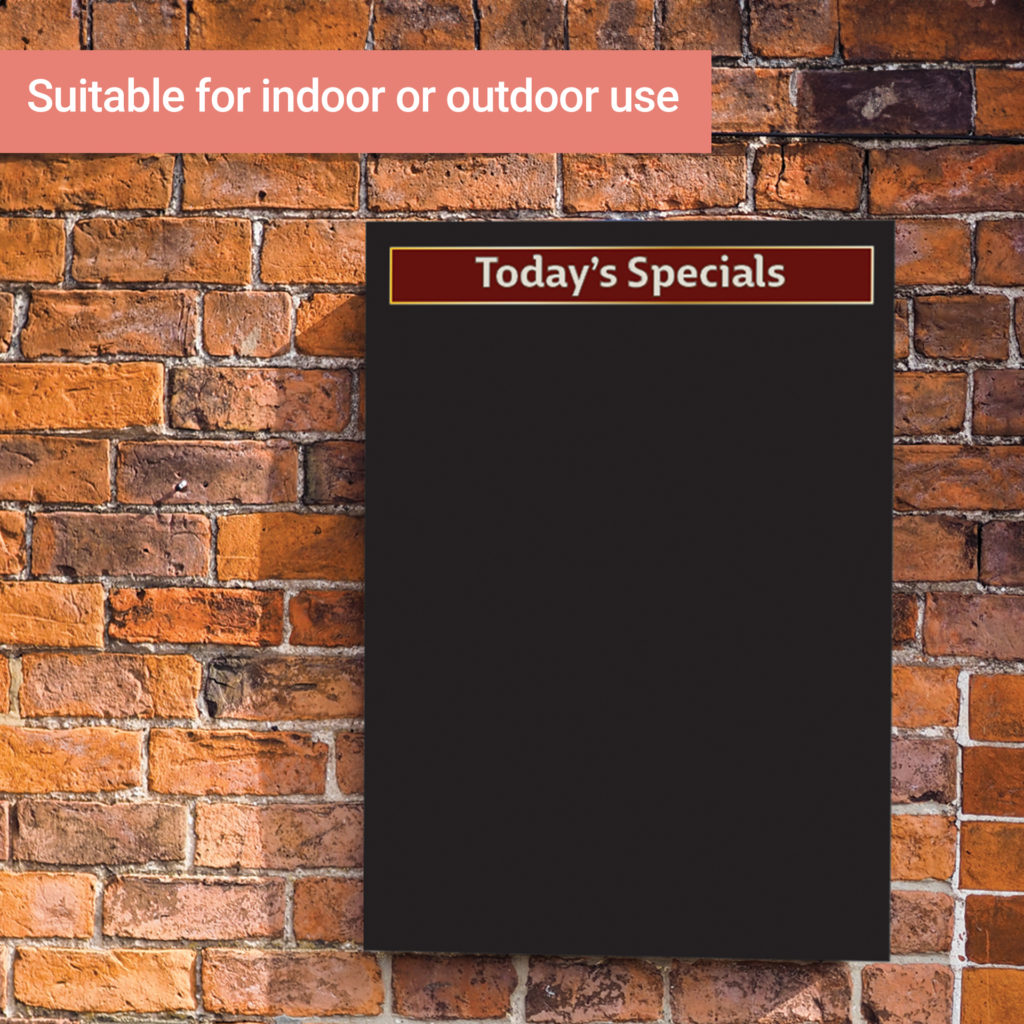
Outdoor wall-mounted blackboards are permanent written surfaces for open-air locations. Constructed with weatherproof frames and UV-stable boards, they are ideal for school playgrounds, pub gardens, café terraces and community notice boards throughout the UK.
Standard models employ marine-grade ply or exteriro grade MDF, with stainless steel, zinc-plated or brass fixings and drip edges to shed rainwater. A soft cloth and water are fine for day-to-day maintenance. To plan positioning, consider shade, footfall and sightlines. The paragraphs below detail choice and prices.
Key Takeaways
- Outdoor wall-mounted blackboards provide a robust, reusable sign solution for UK gardens, pubs, cafes, schools and public spaces. Pick materials like real wood, powder-coated metal or HPL for durability and a look that fits your environment.
- Prioritise weatherproofing, with sealed edges, UV-resistant finishes and moisture-proof surfaces. Fit under some form of cover where possible, and refresh lacquer or protective framed coatings regularly to resist British rain, frost and sunlight.
- Match mounting systems to your wall type with appropriate fixings to either brick, render, timber or plasterboard. Choose solid hardware and secure installation in windy or high-traffic locations, and check level and alignment before final fix.
- Choose a writing surface from traditional chalk (chalk sticks) and liquid pens.
- Keep your announcements smooth and easily wiped with a damp cloth for quick updates.
- Size the board to your space and content needs, from small patios to sizeable school playgrounds and pub gardens. Think sightlines, eye-level and accessibility (including wheelchair access if applicable).
- Use blackboards to update menus, promotions and community notices fast and cut down on printed waste. Inspire creativity and interaction with chalk art, seasonal messages and local hooks across the UK.
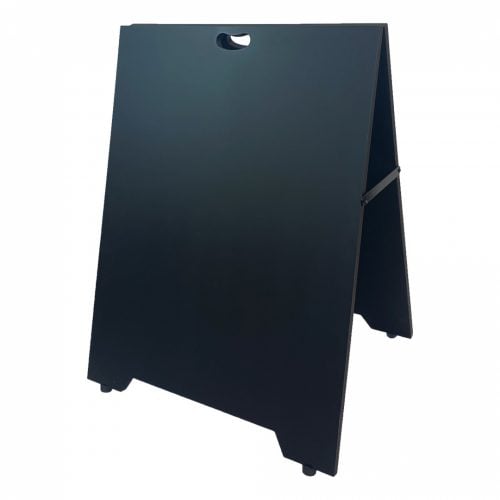
What Are Outdoor Wall-Mounted Blackboards?
Tough writing boards created for outdoor walls, used for daily messages, menus and announcements. Familiar throughout the UK in gardens, cafes, pubs, schools and streets. Choose wood or metal frames and pressure laminate faces for longevity. Reusable and sustainable, they save paper waste and printing costs. Affordable advertising that can be changed in seconds and reused year after year.
1. Core Materials
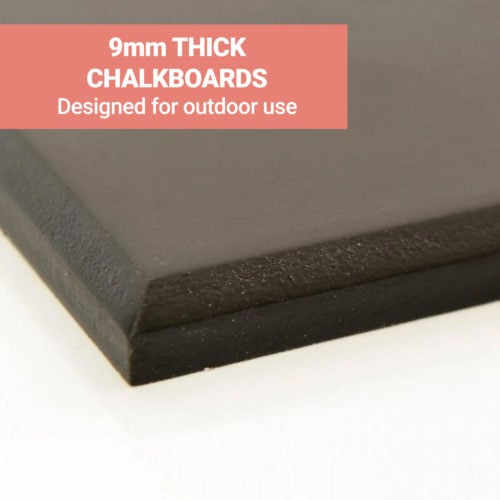
Frames and faces are determined by necessity. Real wood gives a warm, traditional look for pubs and garden walls. Metal frames fit in well with trendy shopfronts and bustling pavements. Exterior MDF is the standard outdoor face: 9 mm thick, maintenance‑free, resistant to chemicals, water, and wear. Contact us for speciality materials that make chalkboards for safe use in schools.
It’s all in the details. Powder coating on steel or aluminium resists chips and rust. Satin lacquer on timber seals in moisture whilst allowing the grain to show through. Weather-resistant stains and UV-stable varnishes provide protection against sun fade on south-facing walls.
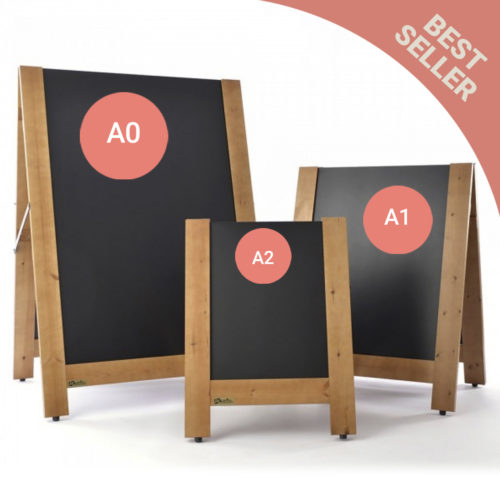
Choose frames to match the site: sleek black for contemporary fronts, oiled oak or stained softwood for heritage sites. In coastal regions, favour our unframed chalkboards with our robust chalkboard painted finish, in protected courtyards, sealed hardwood shines such as our Ash-framed chalkboard range.
2. Weatherproofing
Outdoor use depends on sealed edges, closed-backed panels and waterproof surfaces. Exterior MDF and well-coated marine ply doesn’t swell, so the board remains flat following showers and frosts.
Rust streaks on brick are avoided with stainless and coated fixings. Laminate facings and proper edge seals prevent water ingress that would otherwise warp the board. A quick wipe keeps it clean.
Plan light maintenance. Re-lacquer exposed timber annually. Inspect screws and caps following the winter winds.
3. Mounting Systems
Mounting options comprise drilled holes with screws and plugs, sticky pads for smooth tiles or glass, and suction cups for temporary indoor windows. For brick, masonry plugs; for plasterboard, cavity anchors; for timber, wood screws are fine.
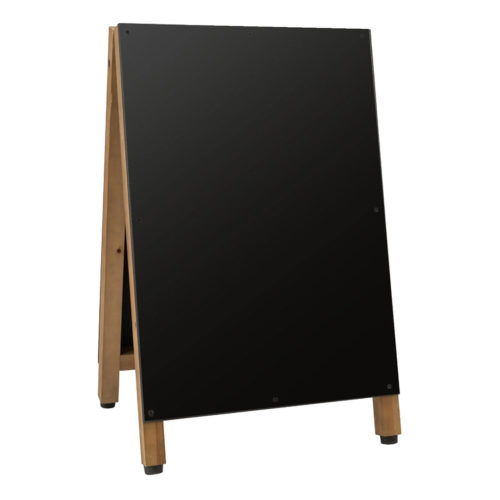
Busy or windy locations require sturdy frames, closed backs, and marine-grade fasteners. We can pre-drill panels and recommend wall fixings or advise the use of our chalkboard A-Boards, ideal for chain roll-outs.
4. Surface Types
Old-school matte chalkboard or our ACM chalk surface, all have their own distinct feel. ACM delivers the quickest stroke as per a whiteboard, whilst our chalkboard paint presents a smooth contemporary feel that is resistant to ghosting.
Go for chalk sticks, liquid chalk pens, or chalkboard pens. Some sets come with liquid pens that are showerproof after an hour but can be wiped with a damp cloth.
Slick, flat surfaces aid distance visibility and wash quickly with water. Interchangeable sides or removable panels allow you to change menus or timetables without having to dismantle the frame.
5. Size & Scale
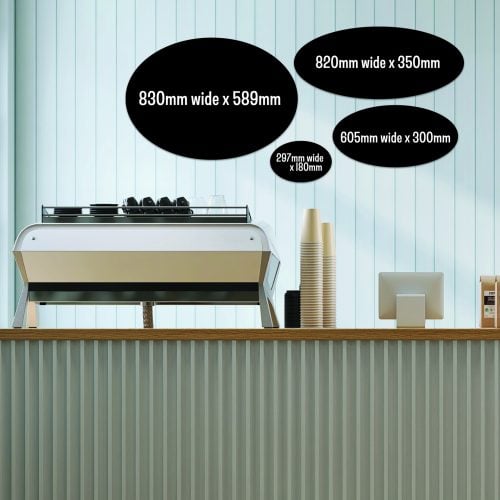
Choose the size to match wall space and reading distance. Small panels are great for doorways, and large formats for broad pub fronts. Typical sizes vary between 206 x 293 mm for small notices to 796 x 1196 mm for feature boards (as well as bespoke cuts for tricky alcoves).
Make space for headings, prices and illustrations. Shop windows might require long, high panels. School corridors may opt for modular sets. Combine one sizeable main board with two little side panels for specials and allergens.
Why Choose One?
Wall-mounted blackboards – much cheaper and reusable means of getting notices out without print runs or waste. Reviews may be updated frequently as things can change in minutes, so menus, promotions, and notifications are up to date. The chalkboard surface provides both character and function, attracting the eye and enticing passers-by to stop and read. Modern boards are made for rain, sun and incessant scrubbing, allowing them to be pitched all year round across the UK.
Garden Charm
A wall-mounted outdoor chalkboard has rustic vibes with a timber frame, or a fresh, modern edge with a slender black border. Fastened to brick or fence posts or a shed wall, it’s a still centrepiece that grounds the area.
Use it to mark up beds and herbs, swap pruning notes or put up a straw poll for the week. Seasonal messages work well too: “Sow broad beans,” “Deadhead roses,” or “Mind the frost.” Guests know what’s growing, children learn plant names without plastic tags.
It works as a creativity wall, too. )Let children draw birds or bugs, sketch a new border, or record crops. A single large panel is good for murals. A number of small panels is good for rotating tasks.
Pick a timber frame to complement sleepers or deck boards for a tranquil, cohesive appearance. HPL chalkboard surfaces repel moisture and abrasion, and wipe down easily after rain or pollen accumulation.
Commercial Appeal
For cafes, pubs, farm shops and salons, chalkboard wall signs provide an instant communication medium for specials, bundles or events. They work a broad pavement where a permanent sign might pick up reciprocal footfall without mess.
Combine a wall-mounted board with a pavement A-board to create a route from street to door. Place price-led hooks outside, then put full menus or service tiers on the wall panel by the front door, or window. Wall-mounted chalkboards suit indoors for staple menus or direct, static messaging that remains welcoming.
Swap copy quickly with chalk pens or liquid chalk pens (the latter set after a short cure and become rainproof, so Manchester showers or Brighton sea mist won’t smear lines). Frame-style boards elevate the finish, and clean branding touches – logo, borders or icons – maintain the neatness. Chalkboards have attracted attention and brand recall for generations, and they do so without reprinting costs every time you amend a dish or add an offer.
A rigid, climate-controlled panel remains out when freestanding signs must come in during inclement conditions. MDF and ACM options are resistant to chemicals, water, fire and wear, so they withstand cleaning, spills and the occasional knock.
Community Hub
In parks, school gates or village halls, a communal chalkboard disseminates local news – market dates, repair cafés, charity fundraisers. It provides a familiar site for posters that countless passers-by will see every day.
Possible second spreads? Big formats lend themselves to joint artwork, rota sign-ups or straightforward gig guides. The handwritten style seems open, encourages little contributions, prompts participation.
Wall-mounted boards provide a fixed point that can’t be blown or parked over. They refresh quickly, are cheap to operate, and encourage short, human annotations.
- Beside play areas at eye level for parents
- Around bus stops or bike racks, where dwell time is high
- On community garden sheds or allotment gates
- By entrances of libraries, sports centres, and churches
- Along busy cut-through lanes facing foot traffic
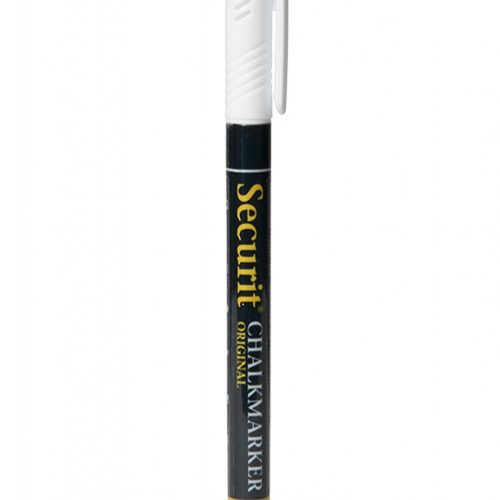


Built for British Weather
Outdoor wall-mounted blackboards are constructed to fend off the UK’s changing cocktail of rain, cold snaps and flashes of defiance. Surfaces employ weatherproof finishes, typically high-pressure laminate (HPL), to repel water and prevent warping, while frames depend on coatings and sealed joints to thwart moisture ingress. Longevity still fluctuates depending on quality of construction, so product details on weather resistance, UV stability and frame treatment are worth scrutinising before you purchase.
|
Material/Finish |
Weather Benefit |
Notes |
|
Exterior grade MDF |
Repels water, resists swelling |
Common on high quality UK-ready boards; stable in rain |
|
Powder-coated aluminium/steel |
Corrosion resistance, rigid support |
Suits coastal and wet areas |
|
Treated hardwood with satin lacquer |
Moisture barrier, natural look |
Renew lacquer as needed |
|
Chipboard and flat-board |
None to low |
Often used in cheaper products for indoor use |
|
UV-resistant paints/coatings |
Reduces colour fade |
Extend life in south-facing spots |
Routine care maintains boards clean and healthy. Wipe writing away with damp cloth to remove residue. Recoat timber frames in satin lacquer when the finish appears flat. Inspect fixings and seals following storms and frost.
Rain & Damp
Choose boards with waterproof MDF or ACM faces and sealed frames, meaning cores won’t swell and wood won’t rot. Look for gasketed backs, capped screw holes and weatherproof sealant along joins, as well as rubber feet on wooden frames.
Wipe with a damp cloth. It pulls chalk and liquid chalk without saturating the substrate. Liquid chalk is rainproof after an hour or so, too, which assists during showers.
Powder-coated frames cope with regular soaking and temper rust streaks. HPL surfaces reject water, maintain edges flat and slow staining. For torrential rain, mount under an eave or partial cover to minimise run-off and splash-back from paving.
Frost & Ice
Tough materials do count for something when it’s less than 0°C out. Pressure laminate and treated wood retains its shape under freeze-thaw, and sealed edges prevent ice from lifting layers. Go for dense cores with low water uptake.
Post-frost, check for hairline cracks, flaking paint or any lifting corners.
Metal or composite frames provide rigidity and greater resistance to frost than softwoods. If you have a removable A-frame to use with your wall board, take it indoors during bitter cold spells.
Sun Fading
UV-resistant surfaces and paints prevent colour fade in strong sunlight, typical on south-facing walls and coastal locations. Dark, high-grade chalkboard layers keep lines crisp and colours bright.
Reapply protector on exposed boards periodically. Which keeps the finish sealed and helps slow fading.
Turn signs or shade it for longevity. Writing stays practical: liquid chalk cures rainproof after an hour, yet wipes clean with a damp cloth when you need a new message.
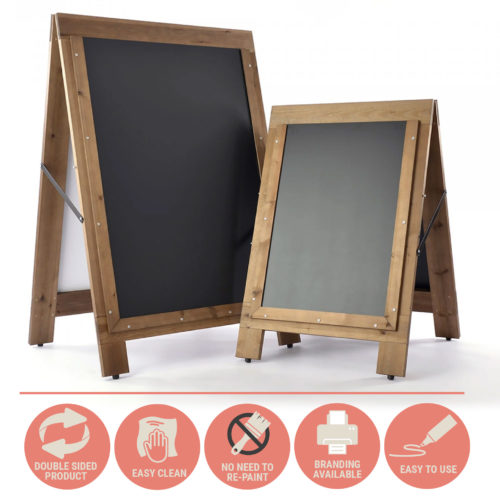
Creative Uses Across the UK
Outdoor wall-mounted blackboards perform multiple functions across hospitality, education, retail and houses. They lend themselves to creative writing and hand-drawn designs that don’t sit as nicely on whiteboards, and they go with good old chalk or liquid chalk pens. Most boards rely on HPL for an impervious, water and scuff resistant surface that deals with showers, sea air and schools. Styles vary from framed wall boards to A-frames, soil stakes and hanging ladder signs, so they’re easy to suit the setting.
- Hospitality: daily specials, gig nights, wine flights, Sunday roast times
- Schools: phonics prompts, art tasks, rota boards, sports fixtures
- Retail: window-side promos, new-in lists, price drops, wayfinding
- Homes: menus, chores, birthdays, garden plans, party signs
- Community: notice hubs, market stall price lists, event maps
The Pub Garden
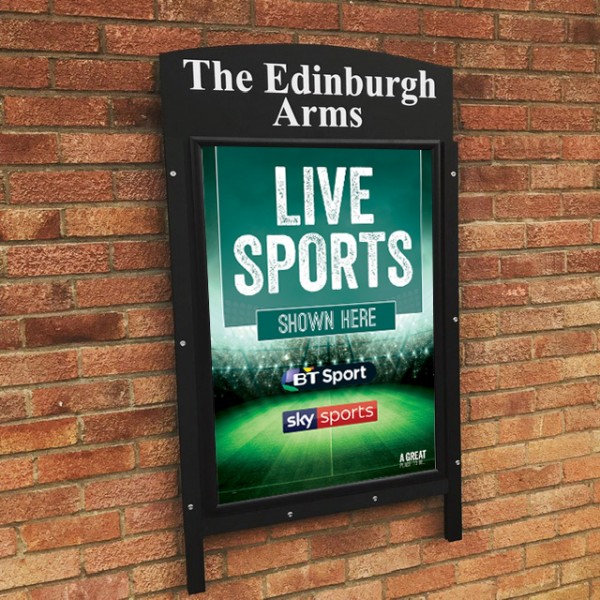
Chalkboard wall signs assist pubs and bars in displaying menus, cask lists and live sport or music listings that pop in ambient light. Liquid chalk pens provide neat lines for prices and allergen notes, and can be wiped clean with a damp cloth, meaning daily lunch, happy hour and late service changes can be a breeze.
A classic frame style in oak or teak maintains the pub feel and matches nicely with hanging ladder signs near the bar hatch. Seasonal themes work well: a stout trail in winter, spritz and rosé by the glass in summer, or a Burns Night menu. Sprinkle in easy brand marks or a doodled motif to achieve a cohesive vibe across terraces and smoking shelters.
The Allotment
Outdoor chalkboards aid in labelling plots, record sowing dates, and passing on tips on watering bans or slug control. Brief notes trump rain-damp sheets curling in the breeze, and the clash invites rapid peer-to-peer updates.
Weatherproof boards with wooden frames give it a rustic feel. Chalkboard panels by the gate lend themselves to notices, seed swaps and compost rotas, even a planting schedule by month. Polish every so often with a soft cloth and diluted soapy water to maintain clarity of writing. Chalk dust can accumulate, so pack cloths away in a lidded box.
The School Playground
Big format boards back up phonics, number lines, free drawing… They transform a wall into a station for group tasks, outdoor lessons or wet-play spillover. Rounded corners and solid fixings minimise snags and withstand heavy use.
Rotate prompts – word of the day, map work, nature sketches. Liquid chalk pens reduce smudging, although classic chalk saves money. Whiteboards work for neat notes, but chalkboards triumph when it comes to vibrant drawings and sensory learning.
The Home Patio
A little board fits a balcony. A larger framed piece fits a terrace for party menus/hebatcure preps. Coordinate frame finishes with fencing, brick or planter wood for a tidy appearance, then finish with a straightforward border, house number or herb drawing.
Opt for chalk sticks for a soft, traditional effect, or liquid pens for vibrant, rainproof lines that wash off with water. Shopping lists, rota notes, even a weekend plan. Move on to holiday artwork for Diwali, Christmas or Eid.
Installation & Placement
Plan for clear sightlines, safe reach and firm fixings. Consider weather, light and surrounding décor so that the board feels like part of the space, rather than an afterthought. Opt for materials that withstand UK rain, frost and sun, and check the wall can cope with the strain.
Choosing a Wall
Choose an inside wall with solid structure and a space 100–150 mm bigger than the board all around for fixings and cleaning access. Bricks, blocks or well-built timber frames are the norm; leave flimsy fences or loose cladding to the other guy. Stuff such as pressure treated plywood, Hardie board, cement board or even salvaged hollow interior doors will survive outside if properly sealed.
Avoid wet zones, such as badly-seigned bricks, cracked render or plasterboard showing signs of dampness. SW facing walls receive the most severe weather so use stronger coatings there.
Consider footfall, and visibility. A wood by a café hatch, school walkway or garden path will read more. Turn it away from the low winter sun and sprinkler overspray.
Mark a paper or masking tape outline at intended height and stand back 3–5m to see if you can still see it. Tweak until it feels readable from the main approach.
Fixing Securely
Match fixings with wall. In brick or stone, employ masonry screws or shield anchors. Use wood screws into solid timber. Use stainless or galvanised hardware outside to resist rust. Where studs won’t line up, toggle bolts spread the load nicely. For hinged boards or lift-up panels, choose strong hinges that are rated for the board’s weight.
Stick-on pads are okay only for very lightweight panels on quiet, smooth surfaces, but weather can deteriorate them. A lot of suppliers provide free assembly or fitting – essential for larger formats or listed buildings.
Prior to final tightening, ensure it’s level with a spirit level on the top and side of the board. If drilling is banned, create a freestanding setup: prop on cinder blocks or a planter frame, then secure against tipping.
Height & Access
Mount at eye line for users For adults, centre the writing field at around 1.5 m. For primary school children, down to 1.1 to 1.3m. For mixed ages, split boards or a tall board with a lower writing zone.
Leave access room for maintenance and restocking, and a clear 1.2 m pathway in front. For wheelchair access, maintain a lower edge of around 700–750mm and controls or hinges that are easy to work.
Use a solid step or platform when lifting. Two for boards 15-20kg up makes them feel safer, and easier to accurately control.
Checklist: confirm dry base; primer unnecessary if a good finish is there); paint on chalkboard in thin coats, allowing each coat to dry completely; seal timber edges in clear-coat; mount; weatherproof joints; resurfaced every few months to maintain crisp writing.
Conclusion
Outside of wall-mounted blackboards do their thing. Robust frames, easy-to-read write space and neat fixings make for an extended life in British rain, frost and sunshine. Chalk or liquid pens are both effective. Clean-up remains quick.
For a Leeds pub, list cask ales by the door. 1. For a Cardiff school, make a yard spelling zone. For a Glasgow shop, stick a lunchtime deal up with a brazenly bold price. For a Brighton home, include a garden chores blackboard. Uncomplicated, low-tech, and light on expense.
To select the correct board, consider size, edge seal, and wall. To get value, keep the surface dry and tidy! Need assistance choosing a fit or size? Get in touch, tell us your wall, and we’ll come up with a plan that fits.
Frequently Asked Questions
Are outdoor wall-mounted blackboards weatherproof in the UK?
Quality boards are. Seek out marine-grade plywood or galvanised-steel frames, exterior-grade paint and UV-stable, non-porous chalkboard coatings. Well-sealed edges and stainless-steel fixings help them resist rain, frost and coastal air throughout the UK.
What surfaces can I mount a blackboard on?
Brick, block, concrete and treated timber cladding work best. Use suitable wall plugs and stainless-steel screws. Steer clear of crumbly render or loose pointing. For imperfect walls, add battens to form a flat, ventilated fixing plane and eliminate moisture traps.
Chalk or liquid chalk pens—which is best outdoors?
For everyday use liquid chalk pens provide more defined lines and withstand light showers. For an authentic writing experience, along with easy cleaning, try dustless chalk. Be wary of the board’s coating. Test pens on a corner to prevent ghosting, and wipe regularly with a damp microfibre cloth.
How do I maintain an outdoor blackboard?
Wipe down weekly with a damp cloth and mild soap. Rinse and dry! No abrasives! Condition porous boards with a light rub of chalk to prime. Check fixings seasonally. Touch up any worn edges and repaint with outside chalkboard paint as necessary.
Do I need planning permission in the UK?
Generally no for small boards on private property. Bigger signs, illuminated displays or boards facing a highway may require consent. Consult local council regulations, particularly in conservation areas or listed properties. Business owners need to examine the Town and Country Planning (Control of Advertisements) regulations.
What size and height should I choose?
Match size to distance viewed from For pavements 600–900mm high works well. For school playgrounds, mount lower for kids (approximately 700-900mm to bottom edge). For pub gardens, adult eye level (1,500–1,600 mm to centre) enhances readability.
Can they be used year-round in British weather?
Ah yes, with the right spec. Opt for UV-stable coatings, sealed edges and rust-proof fixings. Put in a tiny drip edge or capping to throw off the rain. In coastal or high-rainfall environments, go for aluminium frames and rear ventilation gaps to drain moisture.
