



A Strategic Procurement Guide to Commercial Pavement Signage
In the competitive landscape of street-level commerce, pavement signs (also known as A-boards) represent a critical tactical asset for converting pedestrian flow into customer footfall. The purpose of this guide is to empower business owners to make informed purchasing decisions by systematically analyzing their unique needs against the diverse range of available product specifications.
Strategically placed in high-traffic locations, these signs are proven to increase footfall, promote special offers, enhance brand salience at the point of purchase, and guide customers directly to your door. They are a versatile and reusable asset, capable of communicating everything from a daily menu special to a seasonal sale. This guide begins with the first and most critical step in the procurement process: a thorough assessment of your business’s specific requirements.
1.0 Foundational Analysis: Assessing Your Business Requirements
Before exploring the vast market of A-board options, it is critical to first define your business’s specific operational and marketing needs. This foundational analysis ensures that your final purchase is a strategic investment that delivers a measurable return, rather than simply an operational expense. By understanding your own requirements, you can filter product choices efficiently and select a sign that is perfectly suited to its intended purpose.
Key Diagnostic Questions for Your Business
- Message Frequency: How often will your promotional message change? This is a primary consideration. Businesses that update offers daily, such as cafes advertising a “soup of the day,” are well-suited to the flexibility of chalkboards or whiteboards. In contrast, retailers promoting a seasonal sale or a longer-term event may find that printed posters, which can be swapped out less frequently, are a more practical solution.
- Operating Environment: Where will the sign be primarily used? The physical location dictates the required durability and stability. A sign placed on a windy high street or an exposed forecourt will need a heavy, weighted, or water-fillable base to remain stable. Conversely, a sign used in a sheltered indoor foyer, at a pop-up market stall, or on a quiet heritage street can be lighter and more focused on aesthetics.
- Brand Aesthetic: What image are you trying to project? The material and design of your A-board should be a direct extension of your brand identity. Wooden frames, for example, project a “premium, warm feel” that is ideal for boutiques, delis, cafes, and wine bars. Metal frames offer a modern, durable look suitable for busy urban environments, while plastic provides a lightweight, low-cost, and functional option for temporary campaigns or pop-ups.
- Portability & Storage: How often will the sign be moved and where will it be stored? If the sign needs to be brought indoors every evening, a lightweight, foldable design is essential. Consider the folded depth and overall weight to ensure it can be easily handled by staff and stored without taking up excessive space. For instance, the Wipeable Whiteboard model has a folded width of just 45mm, making it ideal for compact storage, but it is critical to note this model has no rubber feet, a key detail when considering placement on wet pavements.
With this foundational analysis complete, you are now equipped to critically evaluate the market’s offerings, using these requirements as your definitive procurement scorecard.
2.0 A-Board Signage Categories: An In-Depth Evaluation
Pavement signs come in a variety of styles and formats, with each category engineered to serve different use cases. Understanding the features, benefits, and ideal applications of these categories is the key to matching a specific product to the business needs you identified in the foundational analysis. This section provides an in-depth evaluation of the primary types of A-board signage.
2.1 The Classic A-Frame
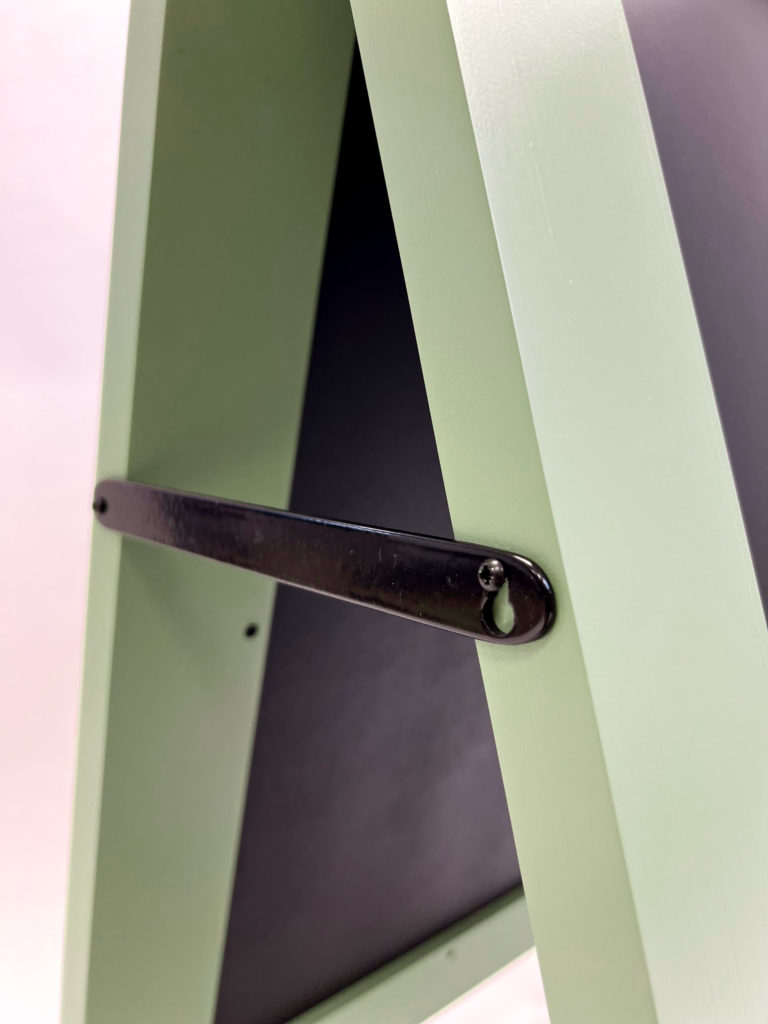
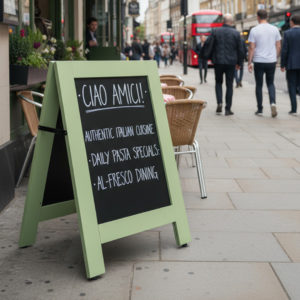
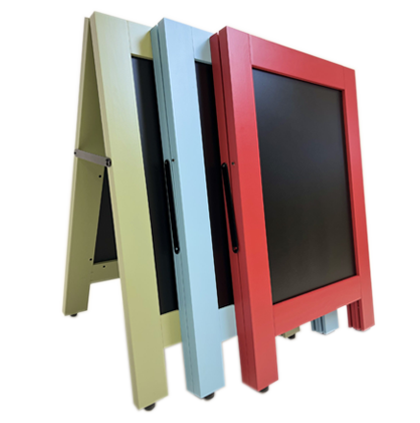
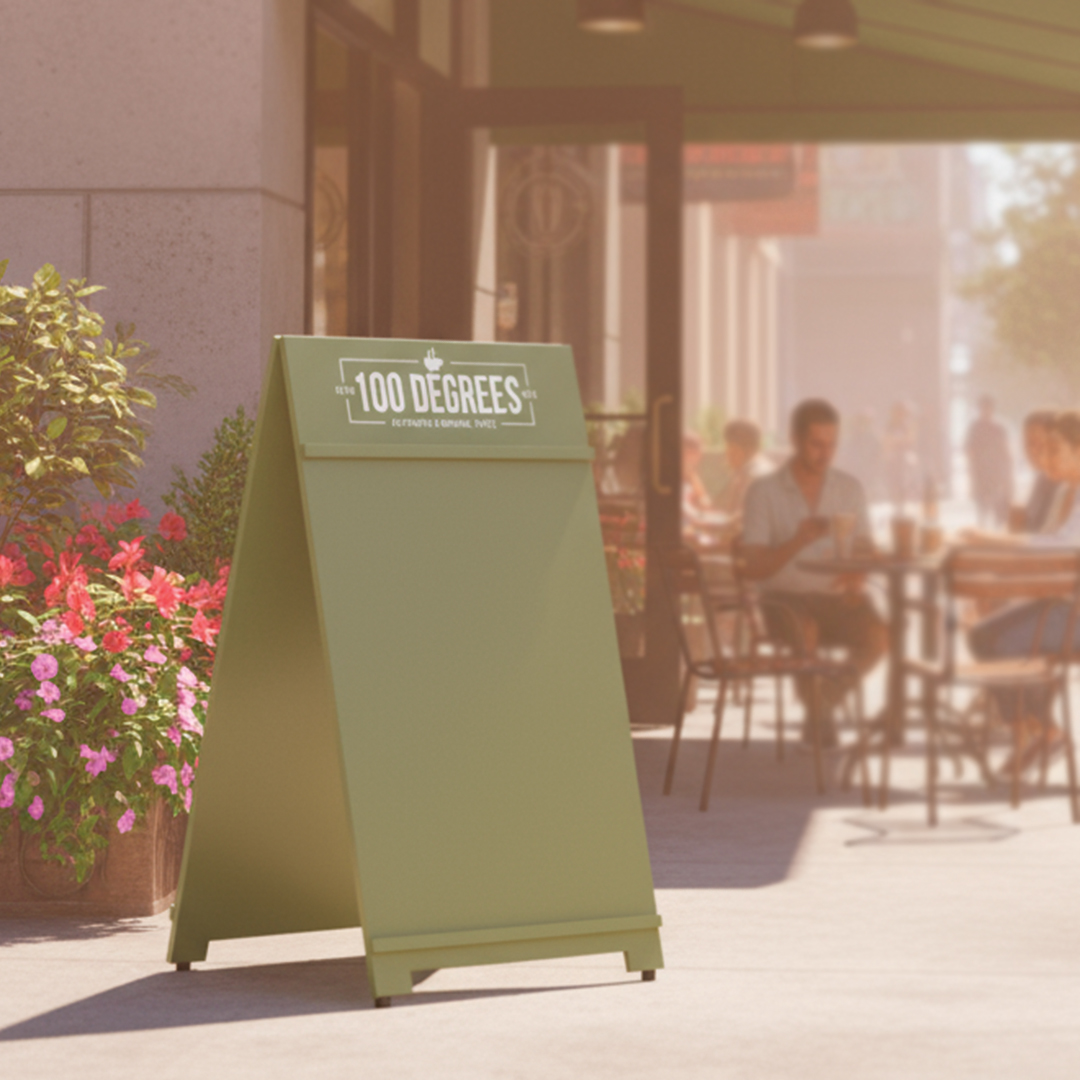
This is the traditional hinged, fold-flat sign that forms a stable triangular shape when open. Commonly constructed from metal, plastic, or wood, the classic A-frame is a versatile and reliable choice, perfectly suited for daily promotions and essential information for businesses like shops and restaurants. It is a strategically sound option for businesses whose brand aesthetic calls for a traditional, welcoming presence on the high street.
2.2 The Poster Display Board
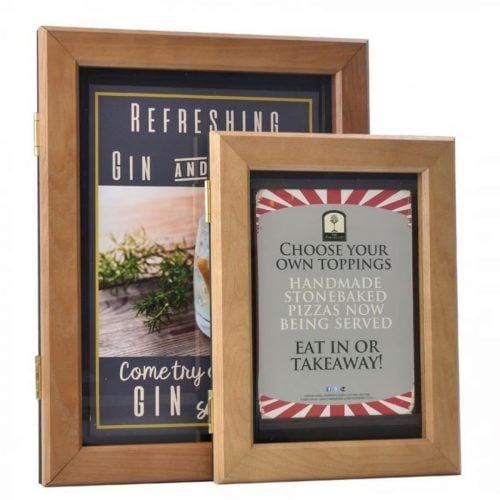
Engineered for businesses requiring professional, high-impact visuals, this sign features “snap frame” technology for rapid poster changes. The frame edges snap open and shut, allowing posters to be changed in seconds. These models often include a protective perspex or anti-glare cover, and it is critical to use waterproof posters for outdoor use. This sign is the ideal hardware for businesses whose message frequency analysis points to periodic, rather than daily, updates.
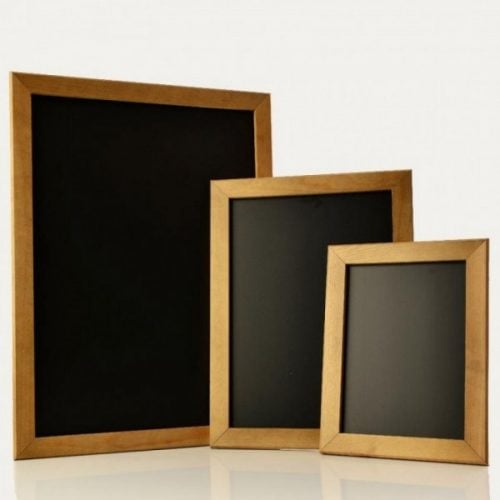
2.3 The Chalkboard / Whiteboard
This category offers maximum creative freedom and is the go-to choice for businesses with dynamic messaging needs, such as bars with daily menu changes. The reusable surface can be updated instantly, with liquid chalk pens producing bolder, shower-resistant lines. Surfaces are designed to be wiped clean without leaving “ghosting” marks. This makes it the definitive choice for businesses that answered ‘daily’ or ‘frequently’ to the ‘Message Frequency’ question in the initial analysis.
2.4 The Swing Sign
A swing sign is defined by its display area, which is designed to swing freely within the frame. This movement provides less resistance to wind, making it a stable option for breezy locations. Swing signs are typically available with printed panels, making them a durable and eye-catching choice for businesses that require a more permanent, fixed message. This directly addresses the needs of businesses whose ‘Operating Environment’ is windy but whose ‘Message Frequency’ is low.
2.5 The Heavy-Duty / Water Base Sign
Specifically designed for maximum stability in exposed locations like garage forecourts and coastal high streets, these signs feature a hollow, heavy-duty base. The base can be filled with water or sand to act as ballast, ensuring the sign remains upright and secure even in strong winds. This directly addresses the needs of businesses whose ‘Operating Environment’ analysis pointed to exposed, high-wind locations.
Comparative Analysis of Featured A-Board Models
To translate these categories into tangible procurement options, the following table provides a comparative analysis of specific, featured models, distilling key specifications to facilitate a data-driven decision.
|
Model Name |
Distinguishing Features |
Available Sizes |
Weight Range |
Ideal Use Case |
|
Universal Reversible |
Hybrid design with a snap frame on one side and a chalkboard on the reverse. |
A1 poster size |
15 kg |
Maximum versatility for businesses using both printed posters and handwritten messages. |
|
Standard Wooden |
Classic A-frame with fixed chalkboard panels for a durable, traditional aesthetic. |
Small, standard & large |
8 – 22KG |
Classic, durable display for cafes, boutiques, and heritage streets needing a warm feel. |
|
Wipeable Whiteboard |
Lightweight frame with wipeable Aluminium Composite Material (ACM) panels. |
A1, A2, A3 |
2 – 5.4KG |
High-traffic environments needing frequent, dynamic message changes with maximum portability. |
|
Poster Display |
Sturdy wooden frame featuring snap frame technology for rapid poster changes. |
A1 & A2 |
14 – 22KG |
Hospitality sector (pubs, hotels) requiring frequent, professional poster updates. |
|
Standard Reversible |
Features two removable chalkboard panels that can be lifted out, rotated, and re-inserted. |
A0, A1, A2 |
15 – 21KG |
Businesses that prepare messages in advance and need to quickly swap panels. |
From the functional categories of signs, we now turn to the fundamental materials they are constructed from, which directly influences their performance and appearance.
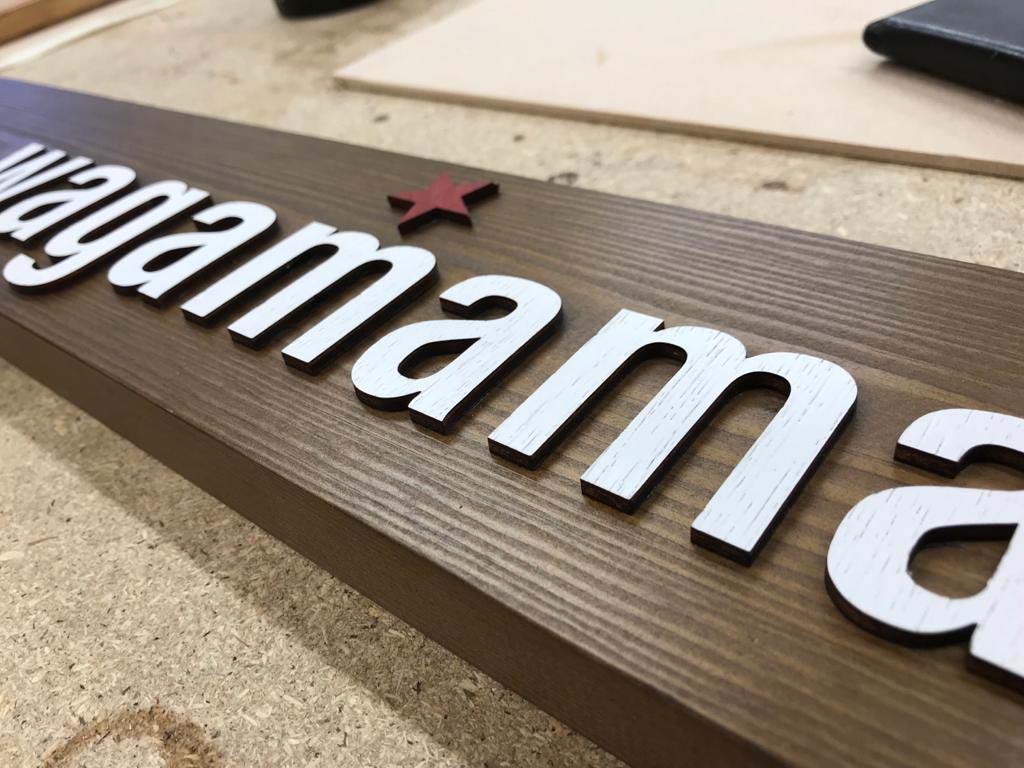
designed to your brief
Bespoke wooden products
We design and manufacture custom-made wooden products of all shapes, styles, sizes and finishes including indoor and outdoor signs, chalkboards, serving boards, menu holders, holders and lots more.
3.0 Material and Construction: An Analysis of Durability and Aesthetics
The material composition of an A-board directly impacts its durability, weight, aesthetic appeal, and required maintenance. Choosing the right material is a strategic decision that should align with your brand, budget, and operating environment. This section analyzes the advantages and disadvantages of common materials to help you select the optimal option for your business.
Material Suitability Matrix
|
Material |
Key Advantages (Pros) |
Key Disadvantages (Cons) |
Recommended Environment (Best for) |
|
Powder-coated metal |
Tough, weather-resistant, and highly stable. |
Heavier and typically comes at a higher cost. |
Busy urban pavements and long-term outdoor use where durability is paramount. |
|
Hardwood/softwood |
Offers a premium, warm, and natural aesthetic. |
Requires periodic care (sanding, oiling, lacquering) to maintain weather resistance. |
Boutiques, cafés, heritage streets, and businesses cultivating a high-end or rustic brand image. |
|
Plastic (PVC/HDPE) |
Lightweight, low-cost, and very easy to clean. |
Less rigid than metal or wood; can scuff or look less premium over time. |
Pop-ups, indoor malls, market stalls, and short-term or budget-conscious campaigns. |
As the matrix illustrates, while materials like metal offer maximum durability, the source context highly recommends wooden displays for their unique blend of cost-effectiveness, aesthetic warmth, and superior customization potential—making them a strategic choice for businesses like delis or wine bars where brand ambiance is paramount.
Essential Construction Features for Longevity
Beyond the core material, certain construction features are critical for ensuring your A-board has a long and effective lifespan. Look for these details when making your selection:
- Weatherproofing: A truly durable outdoor sign will have features designed to repel the elements. This includes frames finished with an exterior lacquer, sealed poster covers to keep moisture out, and water-resistant panels that won’t swell or peel after a downpour.
- Stability: A stable sign is a safe sign. Key features include robust metal hinges, locking stays to keep the frame open at a fixed angle, and rubber feet to keep the frame clear of standing water on the pavement. For windy locations, weighted bases or those that can be filled with water or sand are essential.
- UV Protection: To ensure your message remains vibrant and professional, look for signs with UV-safe poster covers or request that printed graphics use UV-protected inks. This prevents the colours from fading in direct sunlight and ensures your brand identity remains consistent and clear.
Once you have selected a sign with the right materials and construction, it is imperative to consider the rules governing its placement.
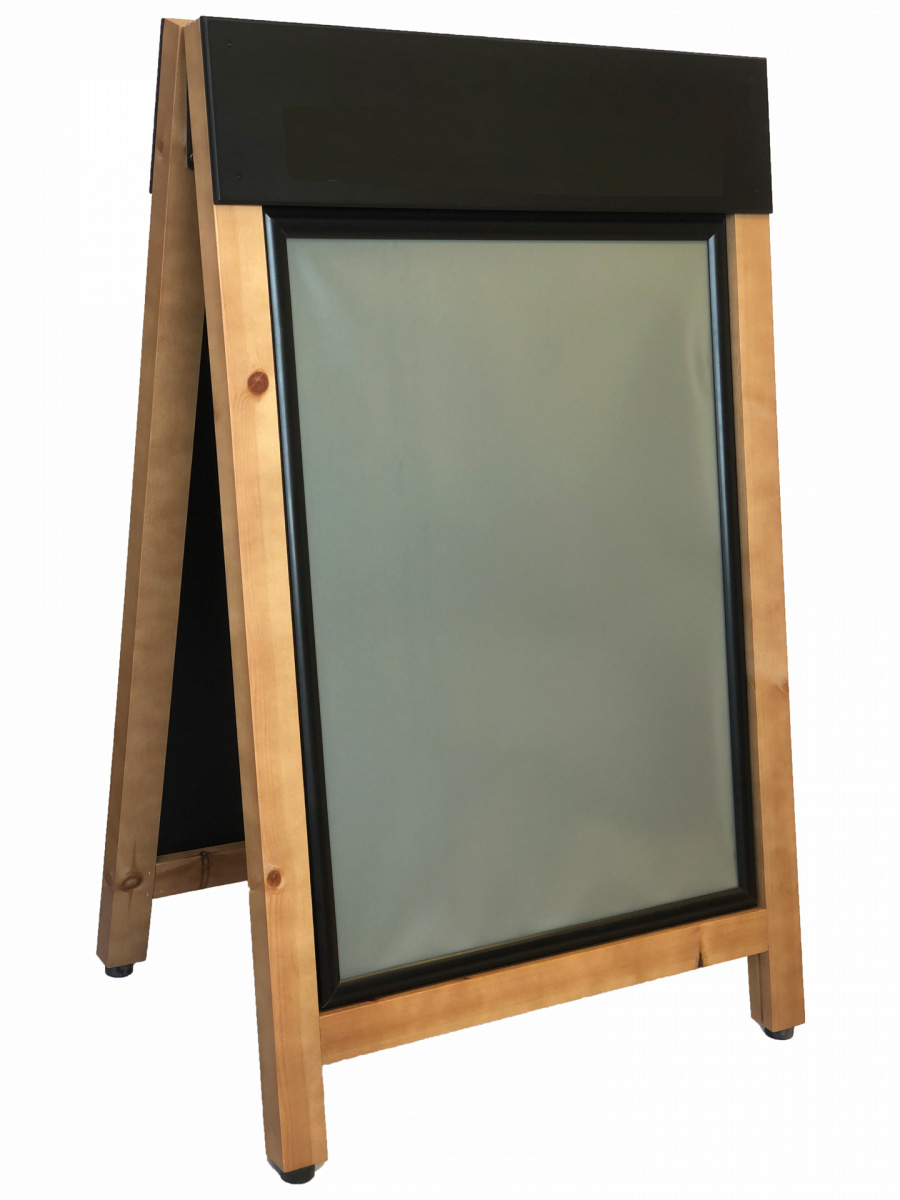
Universible Reversible Pavement Sign
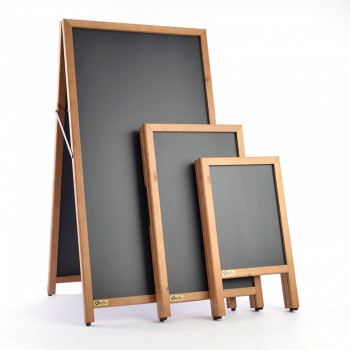
Standard, fixed Pavement Signs
Easy Loading Pavement Sign
4.0 Regulatory Compliance: Navigating UK Council Rules for Pavement Placement
Before purchasing and deploying a pavement sign, it is essential to understand the local council regulations governing its use. Compliance is not merely about avoiding penalties; it is a fundamental aspect of corporate responsibility, public safety, and brand reputation. A non-compliant sign creates liability and projects an image of unprofessionalism. Rules can vary significantly by council, so a proactive check is a non-negotiable step.
Common UK Council Stipulations
- Permissions and Licenses: Some regions require businesses to obtain a specific pavement license or formal permission to place an A-board on a public highway. In other areas, temporary, movable signs do not require a license, provided they meet safety and access regulations. Always check the policy of your specific local council first.
- Pedestrian Clearance: A universal requirement is to maintain a clear and unobstructed footway for pedestrians. Councils often specify a minimum clearance width—commonly at least 1.2m, 1.5m, or even 2m on busy streets—to ensure safe passage for pushchairs, wheelchair users, and the general public.
- Size and Quantity Limits: To prevent clutter and obstruction, councils typically impose limits on the size and footprint of pavement signs. Furthermore, it is common practice to permit only one freestanding, movable A-board per business premises.
- Placement and Safety: Signs must be positioned to avoid creating a trip hazard and must not be bolted down or permanently fixed to the pavement. They should be stable enough to withstand normal conditions but must also be removed during high winds to prevent them from becoming dangerous projectiles, for which the business owner can be held liable.
- City Centre Restrictions: Some city centres and high-density areas may have stricter regulations or even outright bans on pavement signs. These policies are often implemented to improve access and safety, particularly for individuals with visual impairments.
Always read your council’s policy, measure your available space, and audit the placement during busy times to ensure full compliance. After ensuring your signage plan is compliant, the final step is to focus on creating a message that captures attention and maintaining the sign itself.
5.0 Design and Maintenance: Maximizing Impact and Lifespan
Procuring the correct hardware is only the first step. Maximizing its return on investment hinges on two key disciplines: compelling content design to drive engagement and diligent maintenance to manage the asset’s lifespan and appearance. A compelling design can stop a potential customer in their tracks, while a poorly maintained sign can actively detract from your brand image.
5.1 Principles of High-Impact Design
- Clarity and Brevity: Keep your copy “tight” and easy to scan. A passerby has only a few seconds to absorb your message, so focus on one core message per side with a single, clear call-to-action. Effective examples include “Flat white £2.50, today only” or “New season drop in-store.”
- Visual Hierarchy: Guide the viewer’s eye to the most important information first. Use big, bold type for headlines—50-75mm high is recommended for kerbside readability—and high-contrast colours like white or yellow on a black background to make the text pop. A clean, uncluttered layout is always more effective than a busy one.
- Brand Consistency: Ensure the design of your sign aligns with your overall brand identity. Match the colours, fonts, and logos to your other business materials, such as menus, websites, and in-store signage. This consistency builds brand recall and reinforces a professional image.
5.2 Best Practices for Maintenance and Longevity
- Regular Cleaning: To keep your sign looking professional, clean it regularly with a soft, damp cloth. For chalkboards, specialist cleaners can remove residue and prevent “ghosting.” Crucially, avoid abrasive scourers or harsh chemicals that can scratch surfaces and ruin the finish.
- Seasonal Care: Wooden frames require periodic attention to withstand the UK weather. It is recommended to apply a coat of clear outdoor varnish or lacquer annually, preferably before autumn, to protect the wood from moisture damage.
- Weather Protection: Your sign is an investment that needs protection. Always bring signs indoors during high winds, storms, and other extreme weather conditions. This prevents damage to the sign and mitigates any liability for accidents.
- Proper Storage: When not in use, store your sign standing upright in a dry, well-ventilated area. Never lay it flat on a wet or damp floor, as this can cause moisture to seep into the frame and panels, leading to warping and damage.
By combining impactful design with diligent care, your pavement sign will remain a powerful and professional marketing asset for your business for years to come.
6.0 Frequently Asked Questions (FAQ)
This section addresses common questions business owners have when procuring and using pavement signs.
What is an A-frame sandwich board? An A-frame sandwich board, also known as an A-board or pavement sign, is a folding, double-sided, freestanding sign. It is designed to be placed on pavements and walkways to attract footfall by promoting deals, displaying menus, or providing directions. It is portable, stable, and quick to set up, making it ideal for shops, cafés, and events.
Are A-frame boards legal on UK pavements? Yes, but their use is subject to regulations that differ between local councils. You may need permission or a license, and you must always maintain clear pedestrian access (often a minimum of 1.5m). It is essential to check your local council’s specific guidance to ensure compliance regarding placement, size, and safety.
What size A-frame should I choose? The size should be determined by the viewing distance and the space available. A1 or A2 sizes are common choices for high streets, as they offer good visibility without causing an obstruction. Ensure the text is large enough to be legible from a distance; the source suggests text should be readable from 3–5 metres away, and headlines on high streets should be 50-75mm high.
Which materials are best for durability in UK weather? For maximum longevity, powder-coated steel or aluminium frames are excellent choices. For display panels, weatherproof PVC or aluminium composite materials are highly durable. If choosing a wooden frame, ensure it is made from hardwood and treated with an exterior-grade lacquer. Always look for signs with rust-free hinges and stable bases.
Can A-frame boards be reused with new promotions? Yes, most A-frame boards are designed for reusability. Models with snap frames allow you to change printed posters in seconds. Chalkboard and whiteboard versions can be wiped clean and rewritten as often as needed, making them highly cost-effective for businesses with frequently changing offers.
